
The History of Screensavers: From CRT Burn-In to Ambient Displays
We all remember the gentle drift of 3D Pipes across a beige office monitor, or the hypnotic pull of the Maze screensaver during a long lunch break. For many of us, the screensaver was our first taste of desktop customisation — a small act of rebellion against the grey corporate PC. But behind the nostalgia lies a genuinely practical invention. In this article, we trace the screensaver’s journey from a necessary defence against damaged hardware to the ambient, always-on displays we enjoy today.
The CRT Era: When Burn-In Was a Real Threat
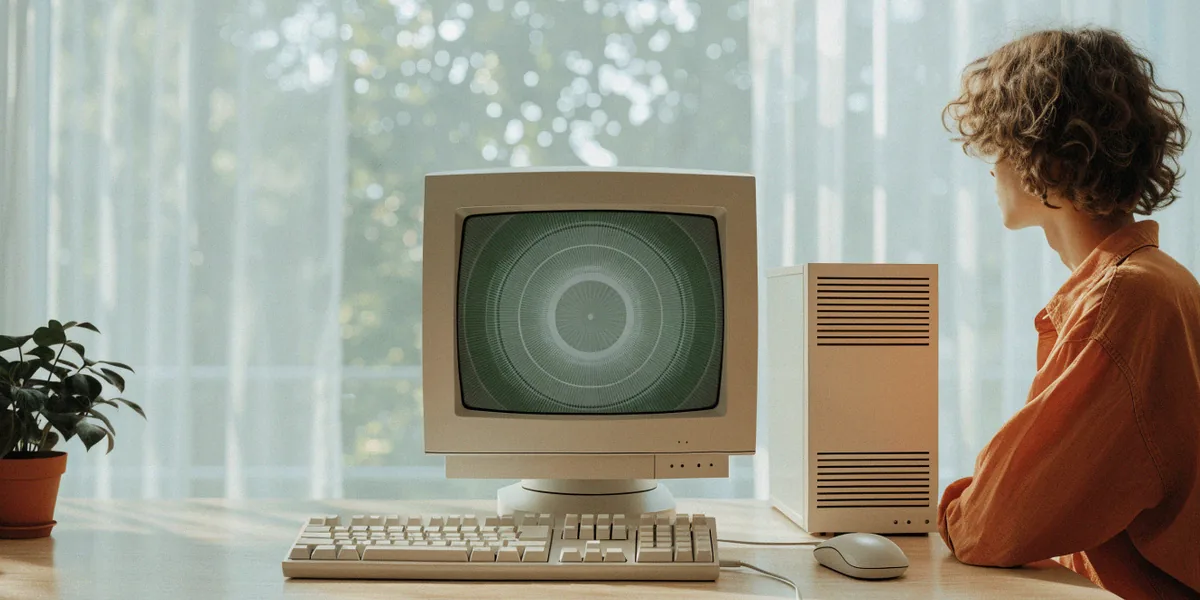
Cathode ray tube monitors dominated desks from the 1970s through the 1990s, and they carried a flaw that no amount of careful use could fully avoid: phosphor burn-in. Understanding this problem explains why screensavers exist at all.
Phosphor Burn-In: The Original Problem
CRT screens worked by firing electron beams at phosphor coatings on the inside of the glass. When the same image sat on screen for hours — a spreadsheet grid, a DOS prompt, a static menu — those phosphors degraded unevenly. The result was a ghostly, permanent imprint of the image, visible even when the screen was switched off. On shared office terminals and point-of-sale systems, burn-in could render a monitor unusable within a couple of years. Something had to step in when the user walked away.
Early Pioneers: Screen Saver and After Dark
The solution arrived in 1989 from two very different directions. John Socha’s Screen Saver for DOS (1989) was one of the first dedicated screensavers, blanking the display after a set period of inactivity and optionally showing simple moving patterns. That same year, Berkeley Systems’ After Dark arrived on the Macintosh and introduced the world to Flying Toasters — a whimsical animation of winged kitchen appliances that became a genuine cultural touchstone. Together, these two products established the template: a screensaver should protect the hardware, but it could also entertain.
The Golden Age of Windows Screensavers
If the late 1980s planted the seed, the 1990s was when the screensaver bloomed into a mainstream obsession. Microsoft’s move into graphical operating systems gave the screensaver a permanent home in the Control Panel, and third-party developers rushed to fill it.
Windows 3.1 and the Built-In Classics
Windows 3.1 (1992) shipped with a modest but beloved set of built-in screensavers, including 3D Pipes, Flying Windows, Starfield Simulation and the now-legendary Maze. These were simple by modern standards, but they were free, they were colourful, and they gave users something to show colleagues. 3D Pipes in particular became a quiet office competition — who could grow the most elaborate network of tubes before the mouse moved?
Third-Party Favourites: Johnny Castaway and Beyond
Beyond Microsoft’s offerings, third-party screensavers flourished. Johnny Castaway, a Sierra release from 1992, told a slow-burning story of a shipwrecked man on a desert island, with new events unfolding across days and weeks. Other favourites included Berkeley Systems’ continued After Dark line and a flood of aquarium, fractal and flying-logo screensavers. For a few years, the screensaver was as much a personality statement as a phone case is today.
Screensavers in the LCD Age: Adaptation and Decline
The arrival of LCD and LED displays in the late 1990s and 2000s changed everything. The technology that had made screensavers essential was suddenly obsolete — but the concept refused to die.
The Shift to LCD and LED Technology
LCD panels do not use phosphors in the same way CRTs did, so classic burn-in largely disappeared. Image persistence on early LCDs was possible but usually temporary. As a result, the practical case for a screensaver weakened, and many users simply set their monitors to power off after a few minutes of inactivity. By the late 2000s, the screensaver felt like a relic — a fun relic, but a relic nonetheless.
Kiosk Mode and Digital Signage: A New Purpose
Yet the screensaver’s core idea — a screen that does something useful when nobody is interacting with it — found fresh purpose in two areas:
- Kiosk mode: Public terminals in libraries, airports and banks use locked-down displays that cycle through content automatically, echoing the original screensaver logic.
- Digital signage: Retailers and transport networks run continuous loops of advertising and information, often with screensaver-style transitions and animations.
In other words, the screensaver didn’t vanish. It grew up, put on a suit, and went to work.
The Modern Renaissance: Ambient Displays and Personalisation
Over the past decade, we’ve watched screensavers return — not as burn-in protection, but as ambient decoration. The modern screensaver is less about saving your monitor and more about setting a mood.
Ambient Displays: Always-On, Always Beautiful
Tools like Wallpaper Engine let users run animated wallpapers and interactive scenes on their desktops, blending the line between wallpaper and screensaver. Windows itself offers lock screen slideshows and the Spotlight feature, which rotates through curated photography. Smart displays such as the Echo Show and Nest Hub have taken the ambient concept further, turning the screensaver into a permanent, low-key presence in the home.
Desktop Wallpaper and Screensaver Hybrids
Today’s desktop wallpaper is often a static image, but the rise of live wallpapers and screensaver-style overlays means the two categories are merging. Users can now schedule a different wallpaper for morning, afternoon and evening, or run a subtle particle animation behind their icons. For anyone who cares about desktop customisation, this is a genuinely exciting time — the screensaver has become a canvas again.
Screensavers in the UK: From Office Nostalgia to Digital Art
Here in the UK, the screensaver has a particularly fond place in popular culture, and it’s still shaping how we use screens today.
British Office Nostalgia: The Maze and Flying Windows
The Maze screensaver was famously used in British offices throughout the 1990s and even appeared in The Office (UK), where its slow, pointless wandering became an unintentional metaphor for office life. Alongside Flying Windows and 3D Pipes, it defined a generation of UK workplace computing. Ask anyone who worked in a British office between 1993 and 2000 about the Maze, and you’ll get a smile.
Digital Signage in UK Retail and Transport
Digital signage in London’s West End uses screensaver-like displays for advertising, cycling through brand content on huge LED screens around Piccadilly Circus and Oxford Street. Similar setups appear across UK transport networks, from departure boards at major rail stations to promotional loops in shopping centres. The screensaver aesthetic — motion, repetition, ambient presence — is alive and well on British high streets.
FAQ
Are screensavers still necessary for modern monitors?
For most LCD and LED displays, no. Burn-in is largely a CRT problem, though OLED screens can still suffer from image retention. Modern screensavers are used more for decoration and personalisation than protection.
What was the first screensaver?
John Socha’s Screen Saver for DOS (1989) is widely regarded as one of the first dedicated screensavers. Berkeley Systems’ After Dark, released the same year, introduced the iconic Flying Toasters.
Why was the Maze screensaver so popular in the UK?
It shipped with Windows 3.1 (1992) and became a staple of British office PCs. Its appearance in The Office (UK) cemented its status as a piece of workplace nostalgia.
Can I still use classic screensavers on Windows today?
Yes. Windows still includes a Screen Saver settings panel, and many classic screensavers such as 3D Pipes and Maze can be re-enabled or downloaded from third-party archives.
What is the difference between a screensaver and digital signage?
A screensaver activates after inactivity on a personal computer. Digital signage runs continuously on a dedicated display, often in kiosk mode, cycling through advertising or information — a direct descendant of the screensaver concept.
Screensavers began as a practical fix for fragile CRT hardware, became a cultural phenomenon in the 1990s, and have now evolved into ambient displays and personalisation tools. Whether you’re running a live wallpaper on Windows, managing digital signage in a UK retail space, or simply feeling nostalgic about Flying Toasters, the screensaver remains a small but meaningful way to make a screen feel like your own.